
Blog
Solid vs engineered hardwood: which stands up to our winters?
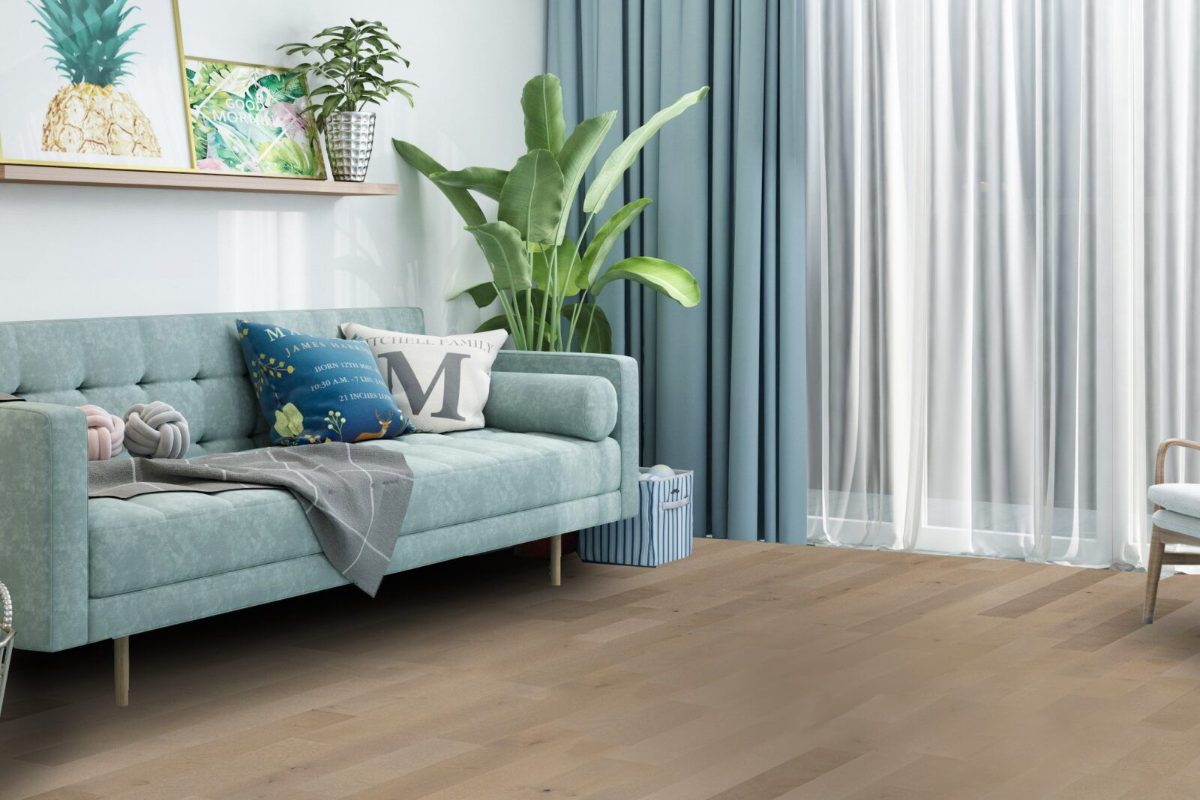
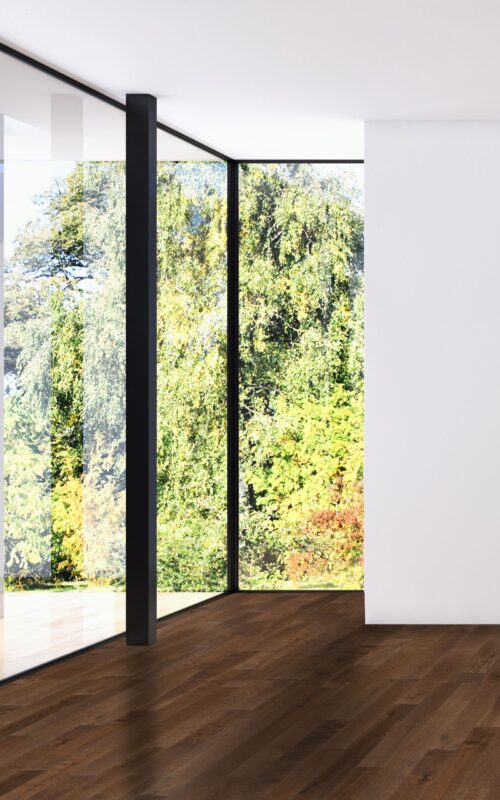

Outside, it’s -25 °C. Inside, the heating is running full blast. And your hardwood floor is working: gaps appear between the boards, the wood can split, the surface can peel.
Solid hardwood or engineered hardwood: which holds up best? We put the question to Filippo Tomasino, President and CEO of Planchers Payless, who has more than 40 years of experience in renovation. The company, a retailer in the Greater Montreal area, has been selling flooring for 15 years.
Key takeaways
- Engineered hardwood handles winter better than solid hardwood: its layered structure barely moves.
- Solid hardwood lasts longer: 100 to 150 years, and four to seven sandings.
- Wider than 5 inches, in a basement or on concrete: engineered hardwood is the way to go.
- In winter, keep humidity between 35% and 50%, never below 35%.
Why does engineered hardwood handle winter better than solid hardwood?
Engineered hardwood handles Quebec winters better because its glued layers limit shrinkage, while solid hardwood shrinks under the heat and leaves gaps between the boards.
In winter, the thermometer drops to -25 or -30 °C, and there’s no choice but to turn up the heat. The result: the air dries out, and so does the wood.
On a solid floor, you can see it. Look at an old floor: the boards, rarely glued, leave gaps between them. A bit like a cake in the oven, which shrinks and pulls away from the sides of the pan as it bakes.
Engineered hardwood, on the other hand, barely moves, even in wide planks. Beyond 5 inches, solid hardwood tends to twist and cup over time. That’s why 6- to 10-inch planks are almost always engineered. Hardwood flooring trends in 2026 point the same way: wide planks and engineered hardwood lead the pack. At Planchers Payless, sales have in fact shifted from solid to engineered over the past five years.
What is engineered hardwood? Is it real wood?
Yes, engineered hardwood is real wood: its surface, the wear layer, is a 1.5 to 4 mm layer of wood glued onto plywood that provides stability.
The idea that it’s fake wood often comes up in store. Yet it’s 100% false. In both cases, you’re walking on real wood. The difference is underneath: solid hardwood is one piece of wood from top to bottom.
“What matters is the surface, not what's underneath. What's underneath is only a question of stability.”
The thickness of the wear layer determines quality. Entry-level products are around 1.5 mm, while quality products go up to 4 mm. Engineered hardwood can therefore be sanded two to three times, sometimes four, compared with four to seven times for solid hardwood.
Good to know: for products of the same origin, for example two Canadian products, engineered hardwood costs 25% to 30% more than solid hardwood.
Which hardwood floor should you choose for upstairs, the basement or concrete?
On a plywood subfloor, solid and engineered hardwood can both be installed for $3 to $5 per square foot; in a basement or on concrete, only glued engineered hardwood will do.
In store, the first question is about the look: the wood species, such as birch, maple, red oak and white oak, and above all the width, the real deciding factor. Under 5 inches, solid hardwood offers more longevity and more value for the same price. Beyond that, it will be engineered.
Upstairs and on the ground floor
Upstairs and on the ground floor alike, most single-family homes in Quebec have a plywood subfloor. Solid and engineered hardwood can both be nailed down on it. It’s the simplest situation: the floor rests on wood, above ground level, and only goes through the humidity changes inside the house. The choice then comes down mainly to the look and the plank width.
On a concrete slab
On concrete, nailing is impossible: engineered hardwood has to be glued, which adds about $1 per square foot. That’s the case in most condos and basements. Solid hardwood, which is nailed down, therefore has no place on a slab.
In the basement
That leaves basement flooring, below ground level and damp even in winter. The slab and walls are in contact with the ground, which keeps the air damp even when the house is heated. For wood, humidity should stay between 35% and 50%, ideally 40% to 45%, and engineered hardwood can tolerate up to 55%. But a basement can climb as high as 70%. Solid hardwood is therefore ruled out.
“If you're looking for stability and a more on-trend product, go with engineered hardwood. If you want something more classic, for the long term, choose solid hardwood.”
How do you care for a hardwood floor in winter to prevent cracks?
To care for a hardwood floor in winter, keep humidity at 35% minimum, ideally 40% to 45%, keep it away from strong heat sources and wash it regularly with mild soap.
Most of the time, the problem comes from heat, not from the floor itself. Near a fireplace, or when humidity drops to 10% or 15%, the glue in engineered hardwood dries out and the surface separates from the plywood: this is called delamination. An overheated basement can have the same effect on the floor above.
“Just this week, we had customers who found it abnormal that the surface of their floor was peeling. But when the humidity in the house drops below 35%, the glue dries out and the wood delaminates.”
Solid hardwood, for its part, shrinks: gaps appear between the boards and, if the wood dries out too much, cracks.
Good winter habits
- Keep humidity at 35% or higher, with a humidifier if needed. CAA-Québec also explains how to measure the ideal humidity level in winter.
- Wash regularly with mild soap.
- Hide scratches with a touch-up marker.
- If a light colour shows too much wear after about ten years, have it resanded.
Engineered vs solid hardwood: how do they compare?
Prices as of October 2026.
| Criteria | Solid hardwood | Engineered hardwood |
|---|---|---|
| Common width | 2 to 5 inches | 5 to 10 inches |
| Price, same origin | Reference price | 25% to 30% more |
| Installation | $3 to $5/sq. ft., nailed | $3 to $5/sq. ft., about $1 more if glued |
| Possible sandings | 4 to 7 times | 2 to 3 times, up to 4 |
| Basement or concrete | No | Yes, glued |
| Lifespan | 100 to 150 years | Shorter than solid hardwood |
Ready to choose the right hardwood floor before winter?
Basement, condo or wide planks: engineered hardwood is the way to go. Classic look on plywood: solid hardwood remains a very long-term choice.
Still hesitating? The Planchers Payless team will help you decide based on your home and your budget.
FAQ: solid vs engineered hardwood
Can engineered hardwood be nailed down?
Yes. Engineered hardwood can be nailed to a plywood subfloor, just like solid hardwood. It can also be glued, which makes it even more stable in a condo or basement. On concrete, glue is mandatory and adds about $1 per square foot to the installation.
How long should wood acclimate before installation?
Allow 24 hours for engineered hardwood and 48 to 72 hours for solid hardwood, with the boxes separated in the room where the floor will be installed. Engineered hardwood needs less time because it is already more stable. Letting the wood acclimate longer causes no problem.
What humidity level should you keep at home in winter for a hardwood floor?
Planchers Payless recommends 35% to 50% humidity, ideally 40% to 45%, and never below 35%, even in extreme cold. Below that threshold, solid hardwood shrinks and can split, and the glue in engineered hardwood can dry out to the point of delamination. A humidifier helps keep the level stable.